From Pressure to Progress
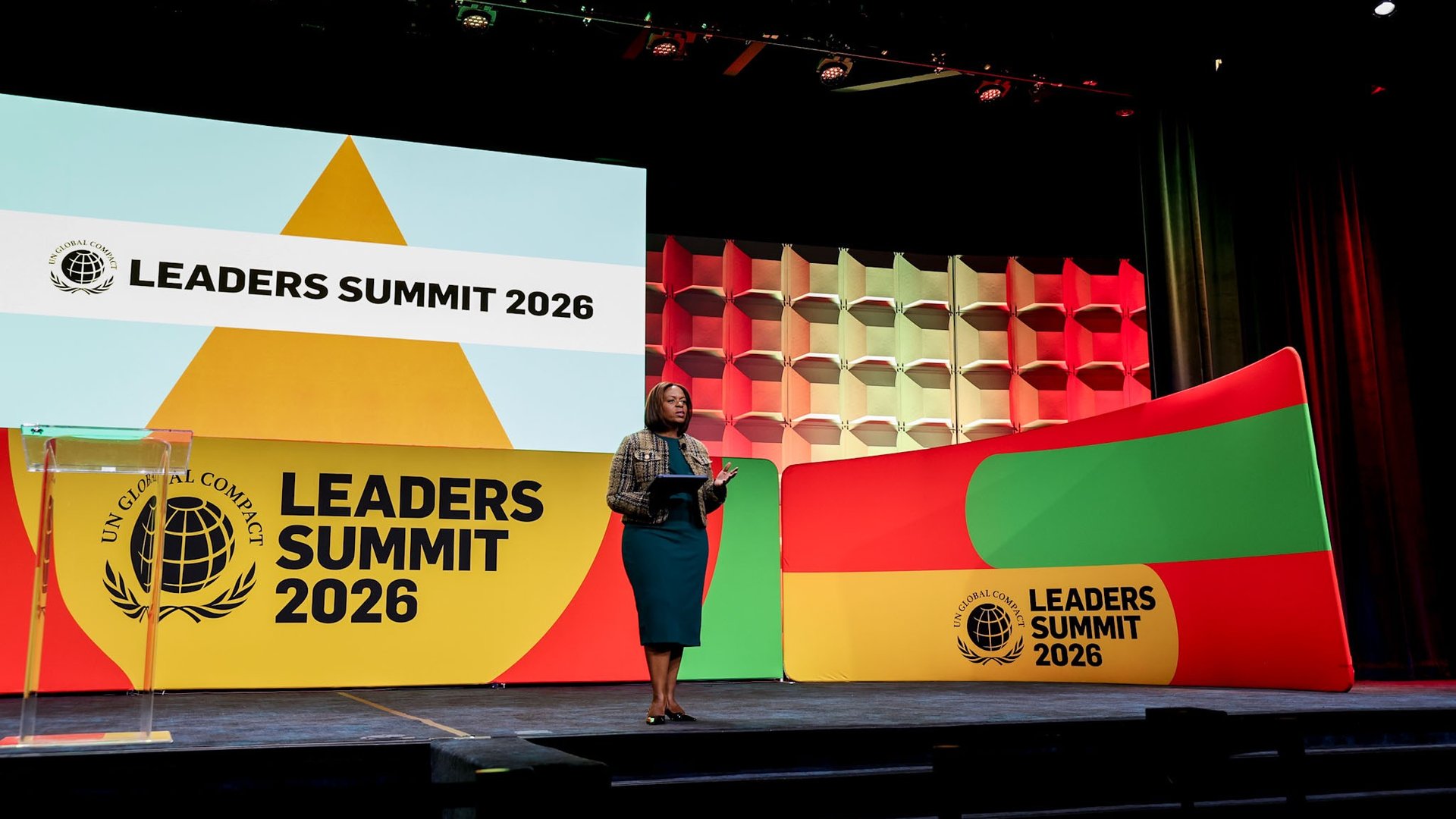
Eldrive's Group ESG Officer, Tsvetelina Rizova, represented the company at the UN Global Compact Leaders Summit in New York, held during UN General Assembly week. The Summit brought together leaders from business, finance, government, the United Nations and civil society around one question: how sustainability commitments turn into measurable results.
Eldrive and the UN Global Compact
Eldrive joined the UN Global Compact in September 2025, committing to its Ten Principles on human rights, labour, the environment and anti-corruption.
In September 2026 the UN Global Compact Academy published a case study on how Eldrive built charging infrastructure in Romania, Bulgaria and Lithuania ahead of demand.
On 22–23 September 2026 Eldrive's Group ESG Officer took part in the Summit in New York, held during UN General Assembly week.
Electrification, responsibility across the value chain, partnerships, people and transparency, set out in Tsvetelina Rizova's notes below.
The case study in figures
The UN Global Compact Academy case study documents how Eldrive invested ahead of demand in Romania, Bulgaria and Lithuania. These are the figures it publishes.
Building infrastructure before the market catches up
In September 2026 the UN Global Compact Academy published a case study on Eldrive in its case library: documented examples of how companies solved a specific problem, published so that others can learn from them.
The problem in Eldrive's case is familiar to every emerging EV market. Drivers wait for chargers, investors wait for drivers, and someone has to move first. The case describes how Eldrive used staged investment, data, partnerships and sustainable finance to build charging infrastructure in Romania, Bulgaria and Lithuania before demand had fully matured, and it draws four lessons for other companies.
- Build ahead of demand, but sequence the risk. Early investment paired with operational data, market signals and clear expansion criteria, so that each phase produces the evidence for the next.
- Use partnerships as an innovation mechanism. Complementary roles for municipalities, site owners, corporate clients and the operator reduce execution risk and speed up scale.
- Convert compliance into investment readiness. Building environmental, social, health and safety and supply-chain capabilities early strengthens the investment case.
- Standardise KPIs and playbooks before scaling. Comparable indicators and decision criteria make it possible to see what works and transfer it across locations and markets.
The operational data from the first stages is what made institutional financing possible: venture debt from the European Investment Bank under InvestEU and an equity investment from the EBRD.
What I took away from New York
I have just returned from New York, where I represented Eldrive at the UN Global Compact Leaders Summit 2026 on 22–23 September, during UN General Assembly week. The Summit brought together leaders from business, finance, government, the United Nations and civil society around one question: how do we turn sustainability commitments into real progress, even under pressure?
The timing mattered for us. Eldrive joined the UN Global Compact in September 2025, and a few days before the Summit the UN Global Compact Academy published a case study on how Eldrive built charging infrastructure in Romania, Bulgaria and Lithuania ahead of demand. New York was a chance to hear how other companies are working through the same questions we face every day.
I came home with a clear message: the transition is no longer only about ambition. It depends on the courage to act, the partnerships that make action possible, and the credibility that comes from delivering results.
A call to leadership
The tone was set by Sanda Ojiambo, Assistant Secretary-General and CEO & Executive Director of the UN Global Compact.
“Resilience is built when purpose is strong, relevant and embedded in decisions shaping company strategy and value.” — Sanda Ojiambo
In other words, sustainability is not separate from business performance. It is part of how companies stay competitive in a changing world, and it has to run through the whole company rather than sit in one department.
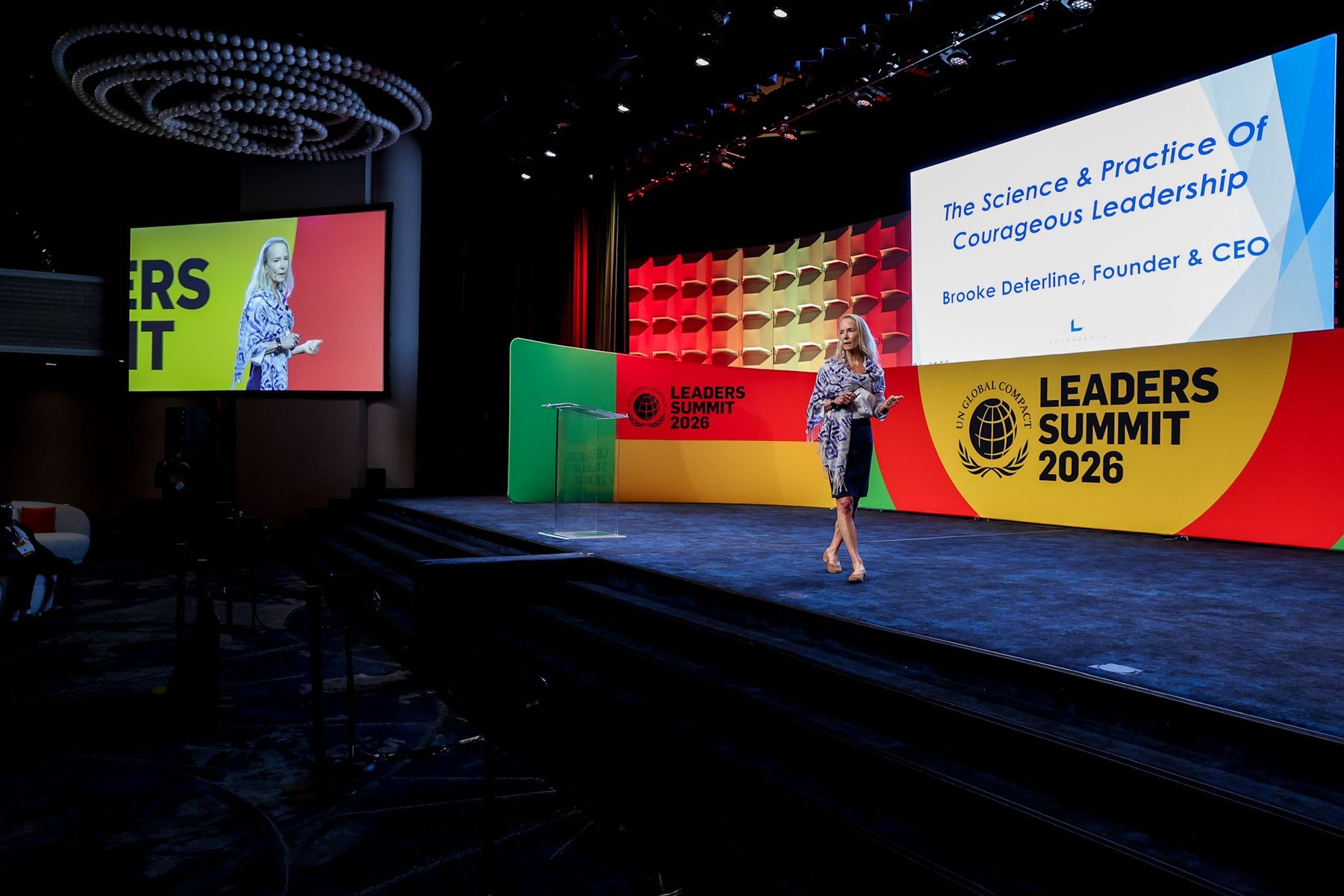
Leadership under pressure
- Ethical lapses in complex organisations rarely begin with big decisions. They build up from small compromises, so values have to be part of daily processes, not only policy documents.
- Under stress, leaders fall back on old habits. Naming your fears and asking the ethical question out loud are practical ways to stay on course.
- Leadership means being present, not having every answer. Trust grows when leaders show up in hard moments, and celebrating progress keeps teams going for the long run.
Human rights due diligence
- 2026 marks 15 years of the UN Guiding Principles on Business and Human Rights, a good moment to measure how far business has come.
- Small and medium-sized companies make up most businesses worldwide, yet many still lack the resources to put responsible practices in place. Closing that gap is a shared responsibility.
- Responsible procurement, open-door policies and grievance mechanisms build trust as much as they ensure compliance.
Managing risk while creating long-term value
- Climate, nature and economic stability are closely linked. A business cannot manage one without the others.
- Change does not need everyone at once. Research presented at the Summit suggests that around 25% adoption of a new practice can be enough to shift the norm.
- Prevention pays. Speakers cited estimates that every euro invested in reducing disaster risk can save up to ten in avoided losses.
- On-site renewables, long-term power purchase agreements and public-private partnerships are already helping companies work around grid limits.
Clean energy: finance and policy
- Company strategies work best when they are aligned with national and regional frameworks, such as the EU's decarbonisation agenda.
- Predictable carbon pricing, stable regulation and clear planning rules give investors confidence and help projects move faster.
- Solar, grids, storage and digital infrastructure need to be planned together, not as isolated assets.
- Electrification is a cornerstone of the transition. It succeeds when energy is affordable and communities see real, visible benefits.
This is the part closest to our own work. A charging network is where grid planning, private investment and everyday drivers meet.
Capital and partnerships
- Blended finance, technical assistance and risk-sharing tools are bringing private capital into markets that were once considered too risky.
- Solutions work best when they are local. Collaboration, standardisation and scalability are what turn pilot projects into lasting systems.
- Digital innovation, such as AI-based credit scoring, is opening access to finance for women and low-income households.
Our own case study is an example of this. The operational data from Eldrive's first years is what made financing from the European Investment Bank under InvestEU and from the EBRD possible.
The new rules of procurement
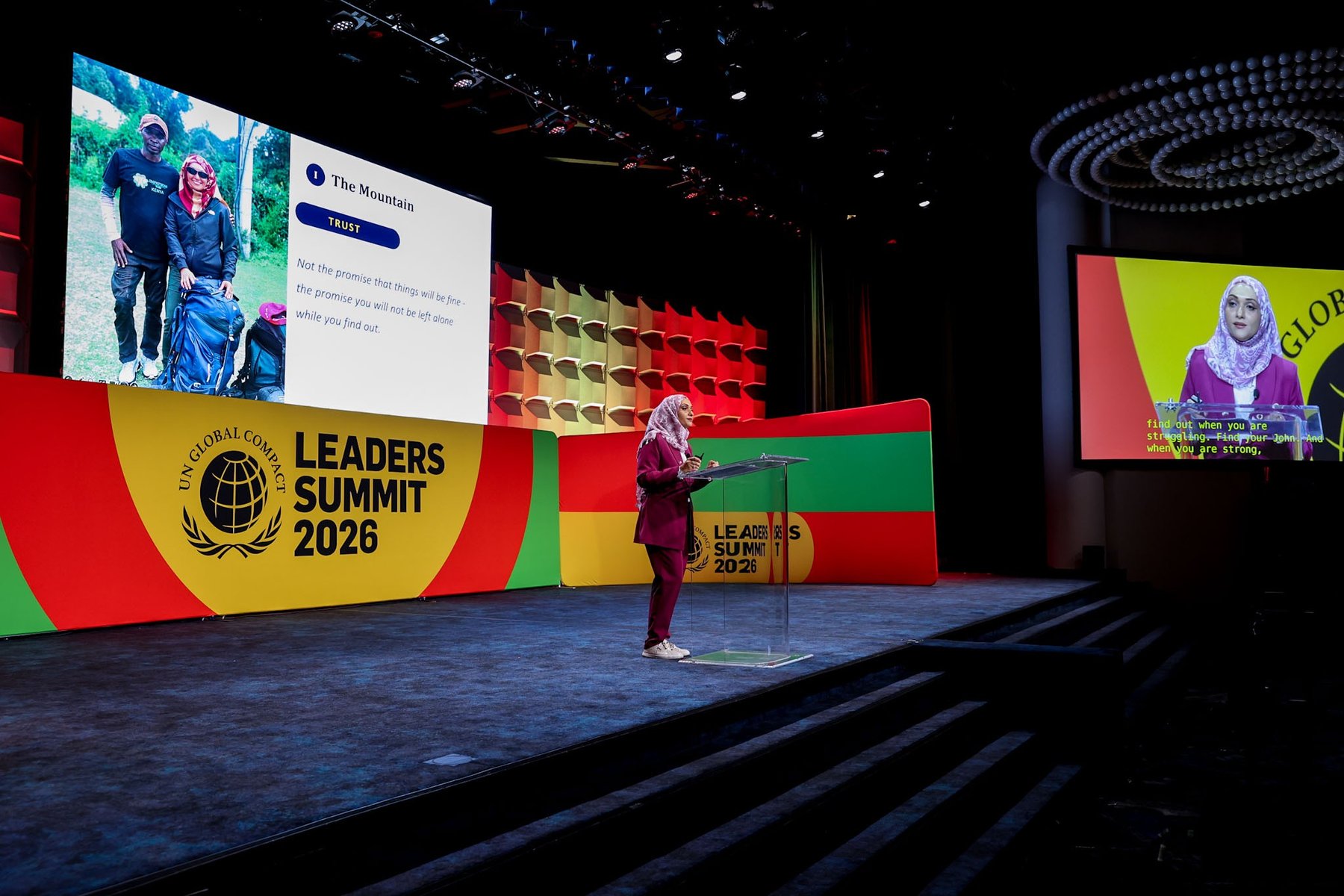
- At the Summit, the UN Global Compact launched its Sustainable Procurement Implementation Framework: a step-by-step route covering strategy, supplier selection, engagement and continuous improvement, with entry points for every level of maturity.
- Gender-responsive sourcing, biodiversity and living wages are moving to the centre of procurement decisions.
- Shared data platforms reduce supplier fatigue and make sustainability easier to measure across value chains.
- The cost of inaction is now higher than the cost of change.
People at the heart of the transition
For me, one of the most inspiring voices was Michelle Armstrong, Managing Director at Ares Management and President of the Ares Foundation. The Foundation supports nonprofits around the world working on career preparation, reskilling, entrepreneurship and financial literacy. In February it launched an initiative to strengthen global supply chains through worker reskilling, bringing large companies and smaller suppliers together.
The mission is to help reskill supply chain workers “to protect people, support prosperity and inspire progress.” — Michelle Armstrong
This connects directly to the discussions on procurement. Supply chains are built on people, and the shift to clean mobility is a human shift as much as a technological one. It creates new jobs and new skills, including the 60 green jobs Eldrive has created so far. A transition is only fair when people have the knowledge and resources to take part in it and benefit from it.
Our road forward
I left New York with the sense that the tools, frameworks and partnerships needed to speed up the transition already exist. What matters now is how consistently we use them. For Eldrive, the Summit confirmed five priorities:
- Electrification. Keep expanding accessible, reliable EV charging infrastructure, because clean mobility only scales when it is convenient and affordable.
- Responsibility across the value chain. Strengthen supplier engagement and human rights due diligence, using the new procurement framework and the UN Guiding Principles.
- Partnerships. Deepen cooperation with public institutions, financial partners and cities to unlock investment in clean infrastructure in Romania, Bulgaria and Lithuania.
- People. Support the skills and talent the e-mobility sector needs.
- Transparency. Keep measuring and reporting our impact openly, because trust is earned through results.
One year in, being part of the UN Global Compact is less a milestone than a commitment. The case study describes what we have done so far. The work ahead is to keep delivering on it.
Tsvetelina Rizova
Group ESG Officer at Eldrive, based in Sofia. She leads Eldrive's sustainability work and its participation in the UN Global Compact, including the UN Global Compact Academy case study, and represented Eldrive at the Leaders Summit 2026 in New York.
Building the infrastructure for clean mobility
Eldrive builds and operates public EV charging in Romania, Bulgaria and Lithuania. If you are planning charging for a site, a fleet or a portfolio, we are happy to talk.


