Infrastructure Beyond Charging
At the European Bank for Reconstruction and Development's Annual Meeting in Riga, Eldrive CEO Stefan Spassov set out the next phase of EV charging: networks that manage their own electricity costs with battery storage, and that turn chargers and parked electric vehicles into flexible capacity for the power system.
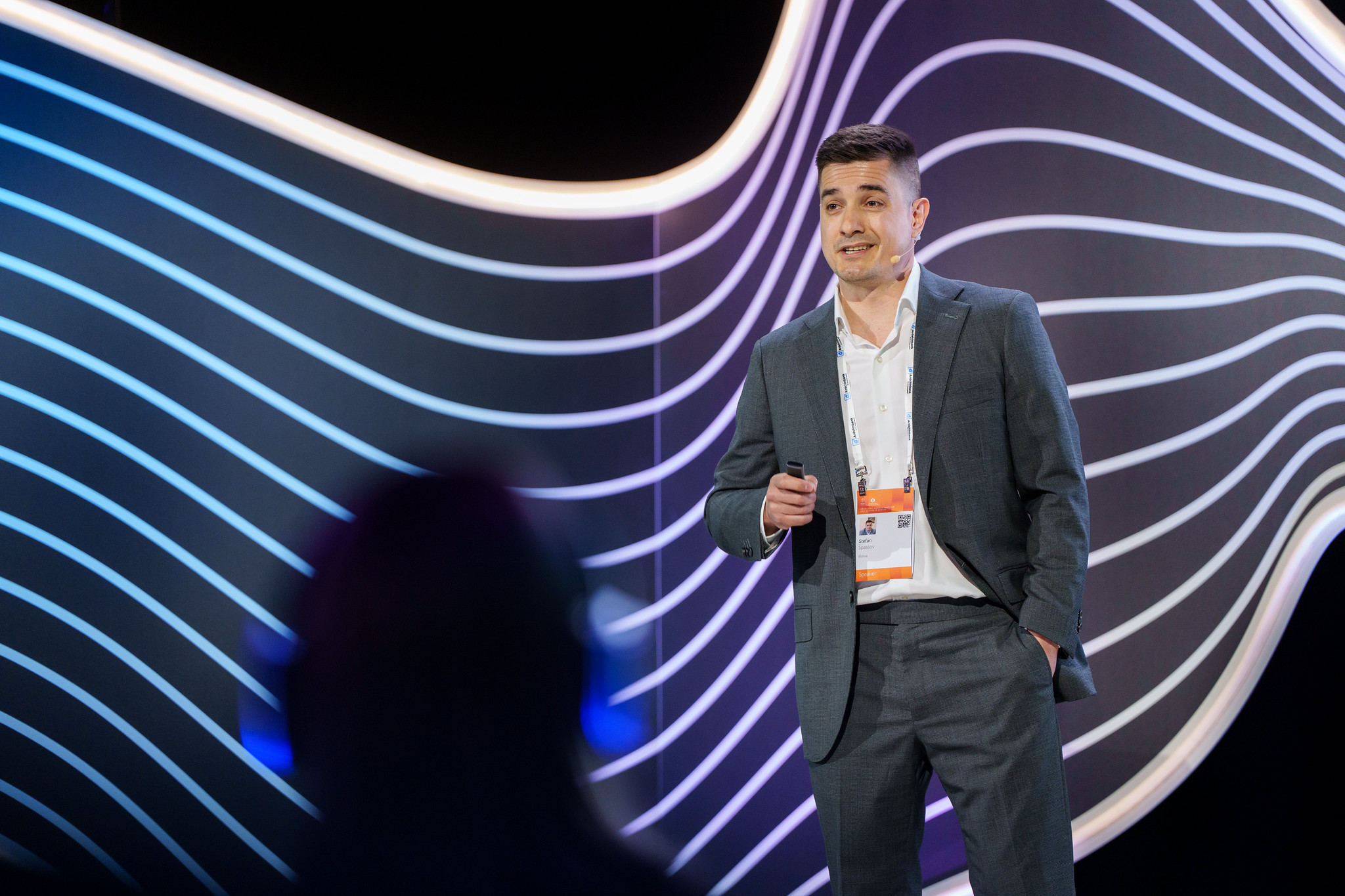
Watch the talk
The full talk from the EBRD 2026 Annual Meeting and Business Forum in Riga: what Eldrive has built across Bulgaria, Romania and Lithuania, why fast charging is an electricity business, and how chargers, battery storage and parked EVs can work together as one flexible energy asset.
What was presented
Building the network was the first phase. The advantage now lies in what an operator does with it: higher utilisation, smarter dispatch and control over the cost of electricity.
Electricity is around half of a fast-charging operator's operating costs, and demand is volatile. Protecting the margin takes energy intelligence, not only good locations.
Charge the battery when power is cheap, dispatch it when prices peak. Eldrive is developing its own storage projects, starting in Lithuania.
Thousands of high-power connection points and tens of thousands of parked EVs can be aggregated into one dispatchable, flexible asset for the grid.
Drivers get cheaper charging, the grid gets flexibility, and the value it creates funds the next stage of the network.
The figures behind the talk
Eldrive is part of Renalfa Solarpro Group and operates public charging in Bulgaria, Romania and Lithuania. These are the figures Stefan Spassov put on screen in Riga.
The EBRD Annual Meeting and Business Forum brings together governments, investors and companies from the economies where the bank invests. In 2026 it was held in Riga, and much of the programme was about energy security, grid resilience and the infrastructure Central and Eastern Europe needs for its energy transition. Stefan Spassov's talk argued that EV charging now belongs in that conversation — not as an add-on to transport, but as part of the energy system itself.
Where Eldrive comes from
Eldrive is the charge point operator of Renalfa Solarpro Group, which as an EPC contractor has completed 14 GW of solar PV projects and 4 GWh of battery storage, trades around 4.5 TWh of electricity a year in South-East Europe, and runs a car-sharing fleet of 1,700 fully electric vehicles. Eldrive itself brings more than ten years of experience, 3,500+ charging points and 50,000+ users across Bulgaria, Romania and Lithuania, and more than 110 MW of installed capacity — with 220 MW targeted by the end of 2026 and 400+ MW by 2028. Its growth is backed by European institutions, including a €15 million equity investment from the EBRD and €40 million of venture debt from the European Investment Bank.
A market still at the beginning
Europe had around one million public charging points in 2024, but roughly 8.8 million will be needed by 2030. The network grew by 35% in 2024, and the rollout still has to accelerate to meet the 2030 targets. The talk put the value of the EU charging market at about €9 billion in 2024, rising to an estimated €120 billion by 2034.
What it takes to compete
Spassov set out the four pillars behind Eldrive's growth so far.
- Lean and agile operations. A small team with a big impact: scale fast, stay lean and partner with best-in-class technology.
- Reliability and uptime. High session and transaction success rates, because drivers trust a charger that works every single time.
- Prime locations and long-term partnerships. Chargers placed where life happens, on terms that work for drivers, partners and Eldrive.
- Full value chain. Generation, supply, storage and charging — controlling the whole journey of the electricity.
Fast charging is not only a mobility business. It is an electricity business.
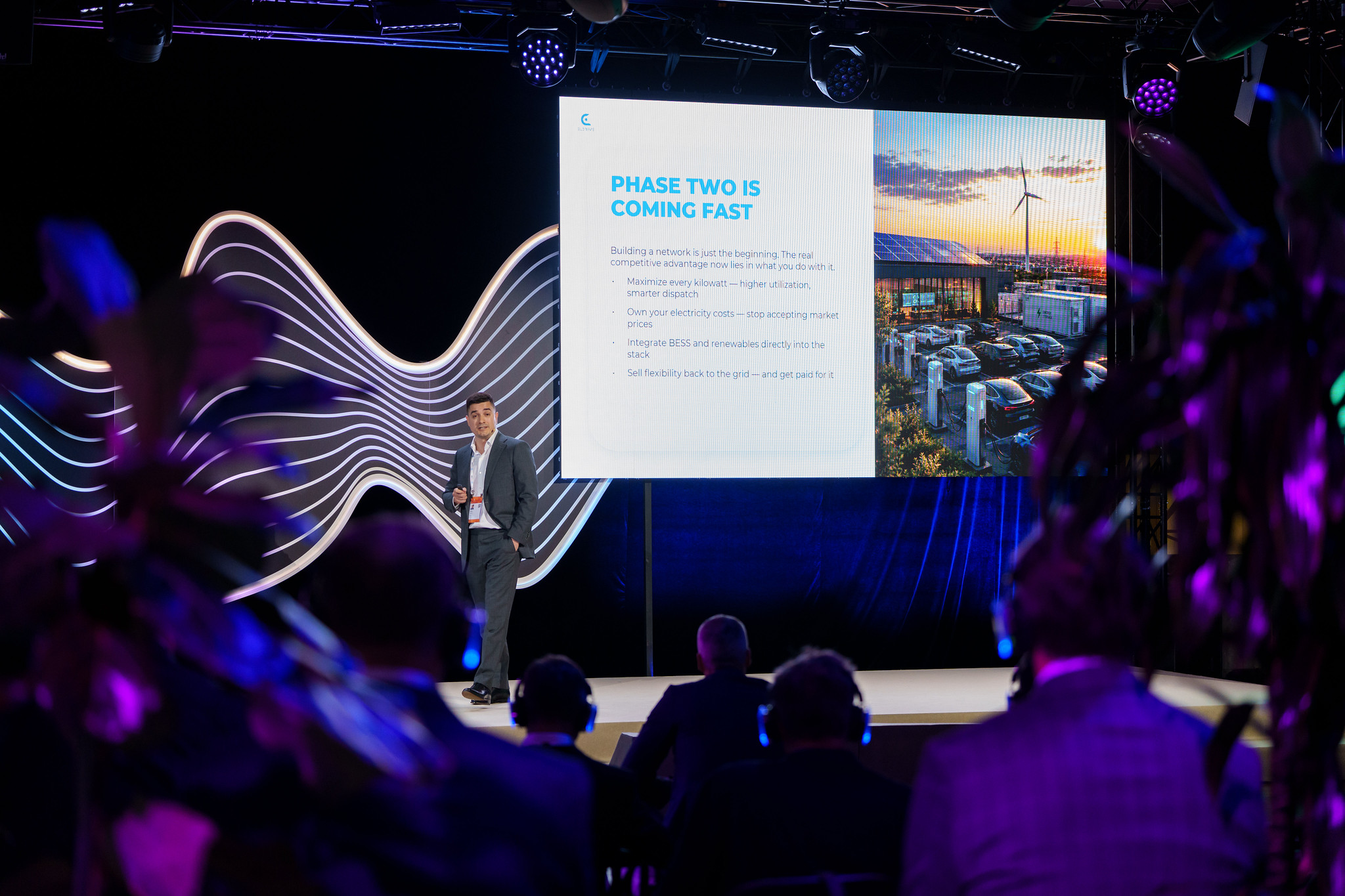
Phase two: from charging operator to energy orchestrator
Building a network, Spassov said, is just the beginning. The competitive advantage now lies in what an operator does with it: maximising every kilowatt through higher utilisation and smarter dispatch, owning electricity costs instead of accepting whatever the market charges, integrating battery storage and renewables directly into the stack, and selling flexibility back to the grid.
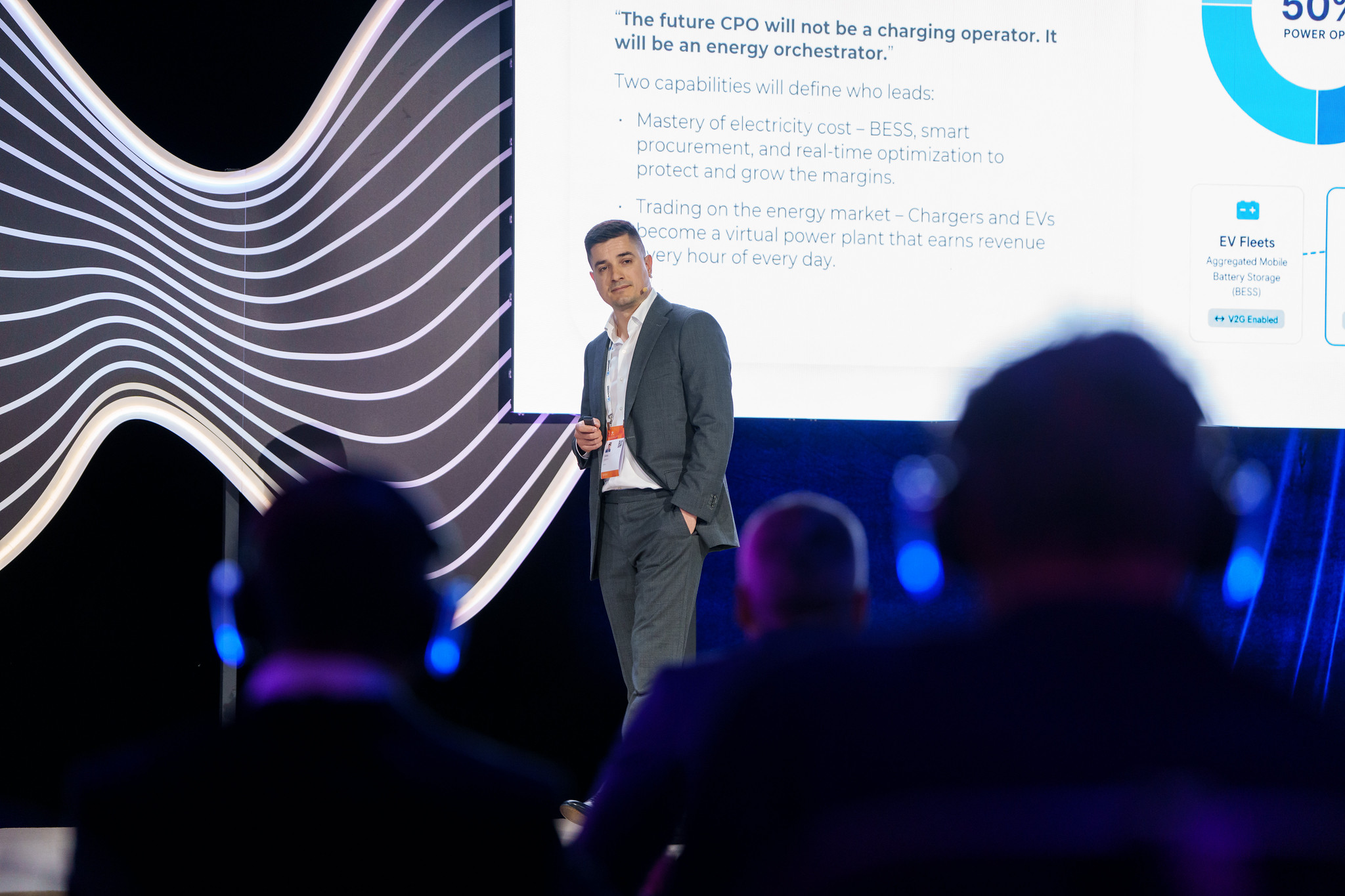
Two capabilities, in his view, will decide who leads. The first is mastery of electricity cost — battery storage, smart procurement and real-time optimisation to protect margins. The second is the ability to trade on the energy market, where chargers and EVs act together as a virtual power plant that earns revenue every hour of the day.
The future CPO will not be a charging operator. It will be an energy orchestrator.
Industrial-scale storage
Electricity is roughly half of a fast-charging operator's operating costs, and charging demand is volatile and hard to control. Industrial-scale battery storage lets an operator charge when prices are low, store, and dispatch when prices peak. The result is a lower cost per kWh, protected margins and a business that does not depend on favourable market conditions. Eldrive is developing its own industrial-scale BESS projects: the first is planned in Lithuania, with further projects expected to be announced in Bulgaria and Romania.
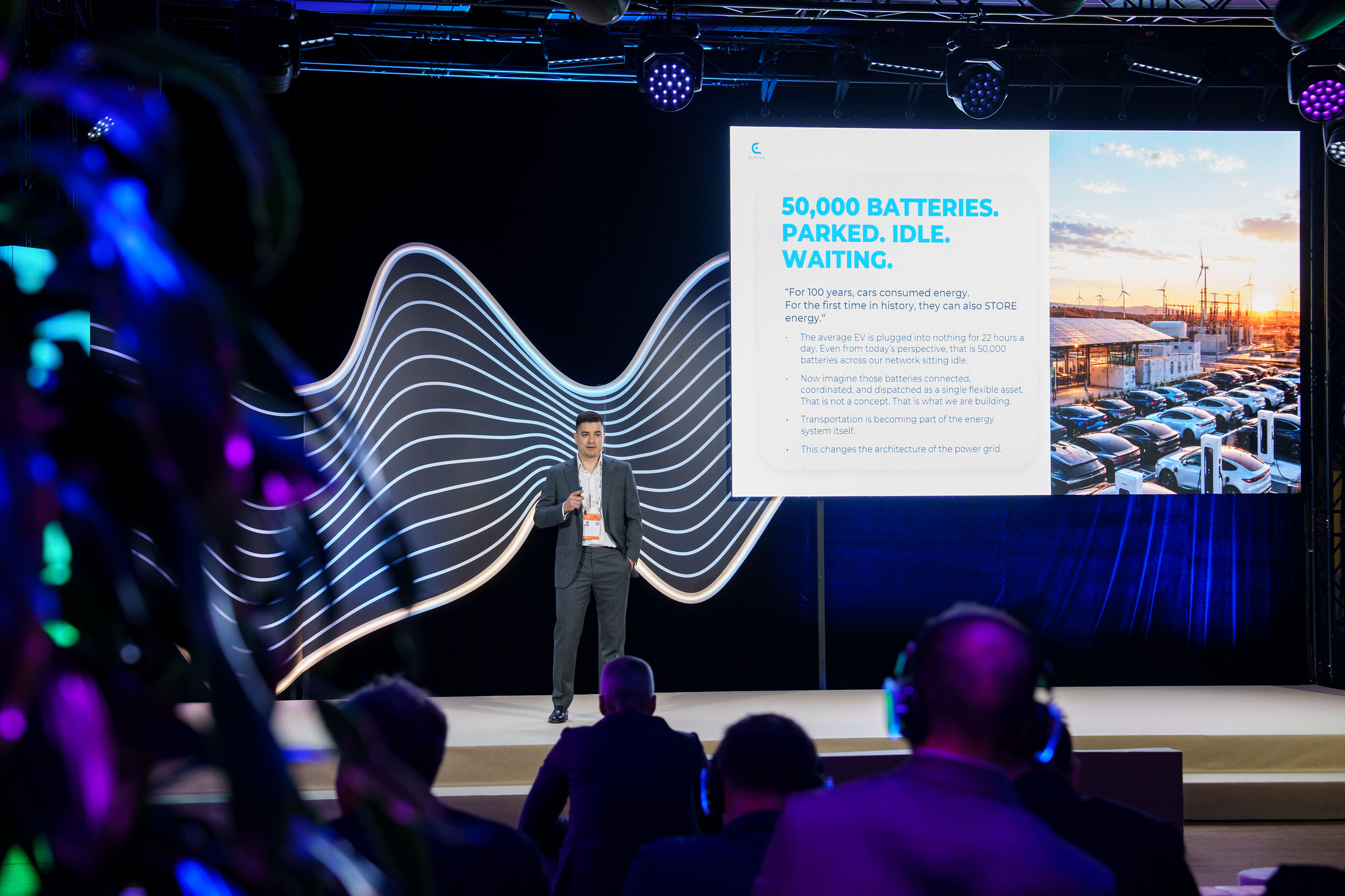
50,000 batteries, parked and waiting
For a hundred years, cars consumed energy. For the first time, they can also store it. The average EV is plugged into nothing for 22 hours a day — across Eldrive's users, that is some 50,000 batteries standing idle. With smart charging and vehicle-to-grid, a network of thousands of high-power connection points in cities and along motorways becomes distributed, dispatchable capacity: able to balance the grid, reduce peaks and earn from ancillary service markets.
The operator becomes the market maker
A single EV owner is invisible to the energy market: too small to bid and too unpredictable to commit. An operator that aggregates public chargers, fleets and home chargers into one coordinated portfolio is large enough to trade and fast enough to respond. The driver sees the result as cheaper charging — and sometimes as income simply for leaving the car parked — while Eldrive manages the algorithms, the grid contracts and the market bids behind it.
A charging network is evolving into a decentralised power plant.
That is the flywheel the talk closed on: satisfied drivers grow the network, a larger network offers more flexibility, more flexibility creates more market value, and that value funds the next expansion.
Why this conversation happened at the EBRD
The European Bank for Reconstruction and Development became a shareholder in Eldrive in 2024 with a €15 million equity investment — the first equity investment the bank has made in a charge point operator.
Its 2026 Annual Meeting and Business Forum in Riga was built around energy security, resilience and the infrastructure Central and Eastern Europe needs for its energy transition. That made it the right audience for the argument Stefan Spassov brought: charging networks are becoming part of that energy infrastructure, not just a service built on top of it.
Stefan Spassov
CEO of Eldrive since 2017 and a member of the Board of Directors of SPARK Technologies. He leads the expansion of Eldrive's charging network across Bulgaria, Romania and Lithuania, and brings a background in corporate finance, mergers and acquisitions and business development. In Riga he presented how Eldrive is connecting mobility with energy.
Connecting mobility with energy
Eldrive builds and operates high-power charging across Bulgaria, Romania and Lithuania, and is developing the storage and energy capabilities that come next. If you are planning charging for a site, a fleet or a portfolio — or want to talk about flexibility and storage — we are happy to talk.


