Eldrive and Huawei sign agreement for 200 MW of EV charging capacity
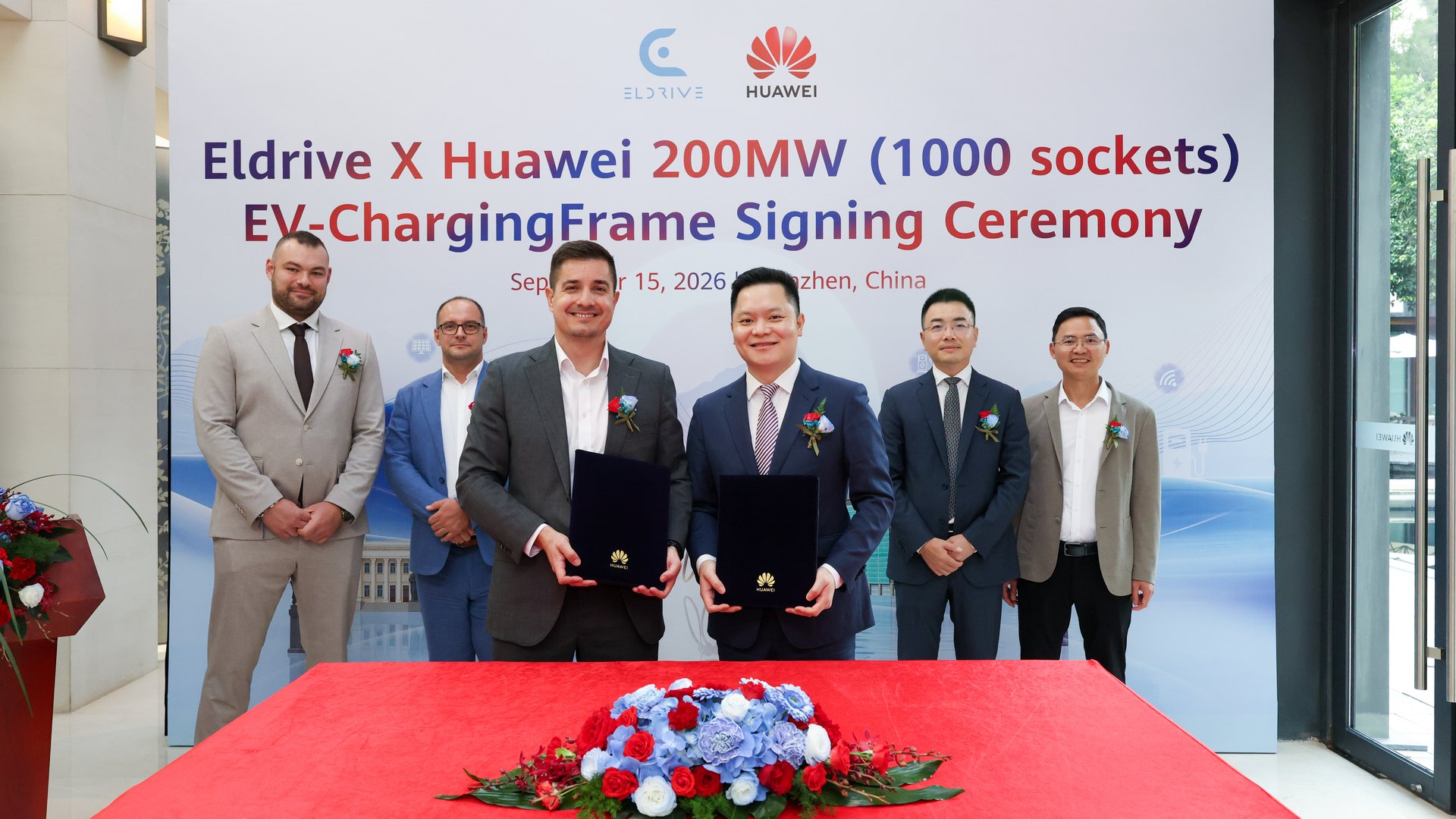
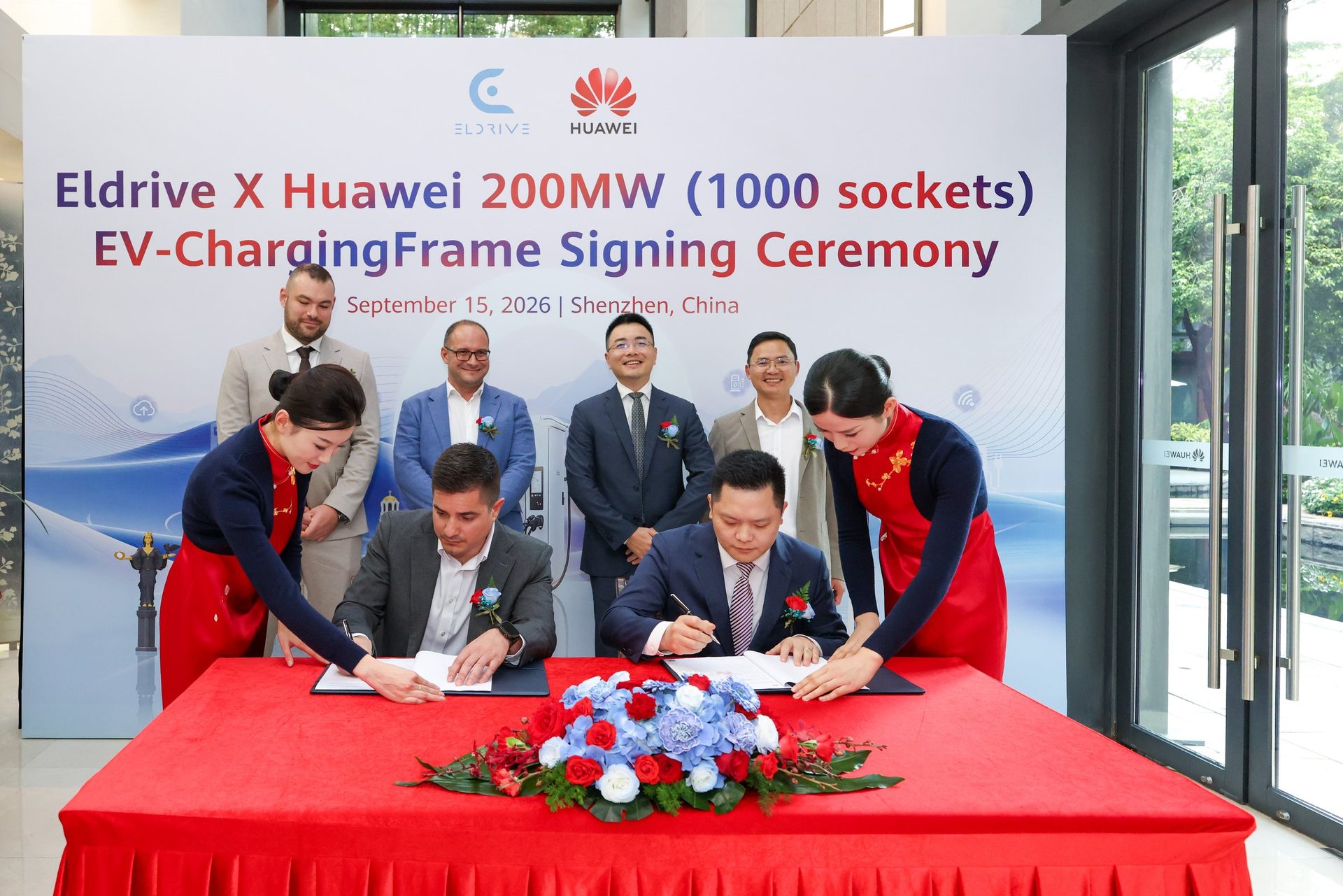
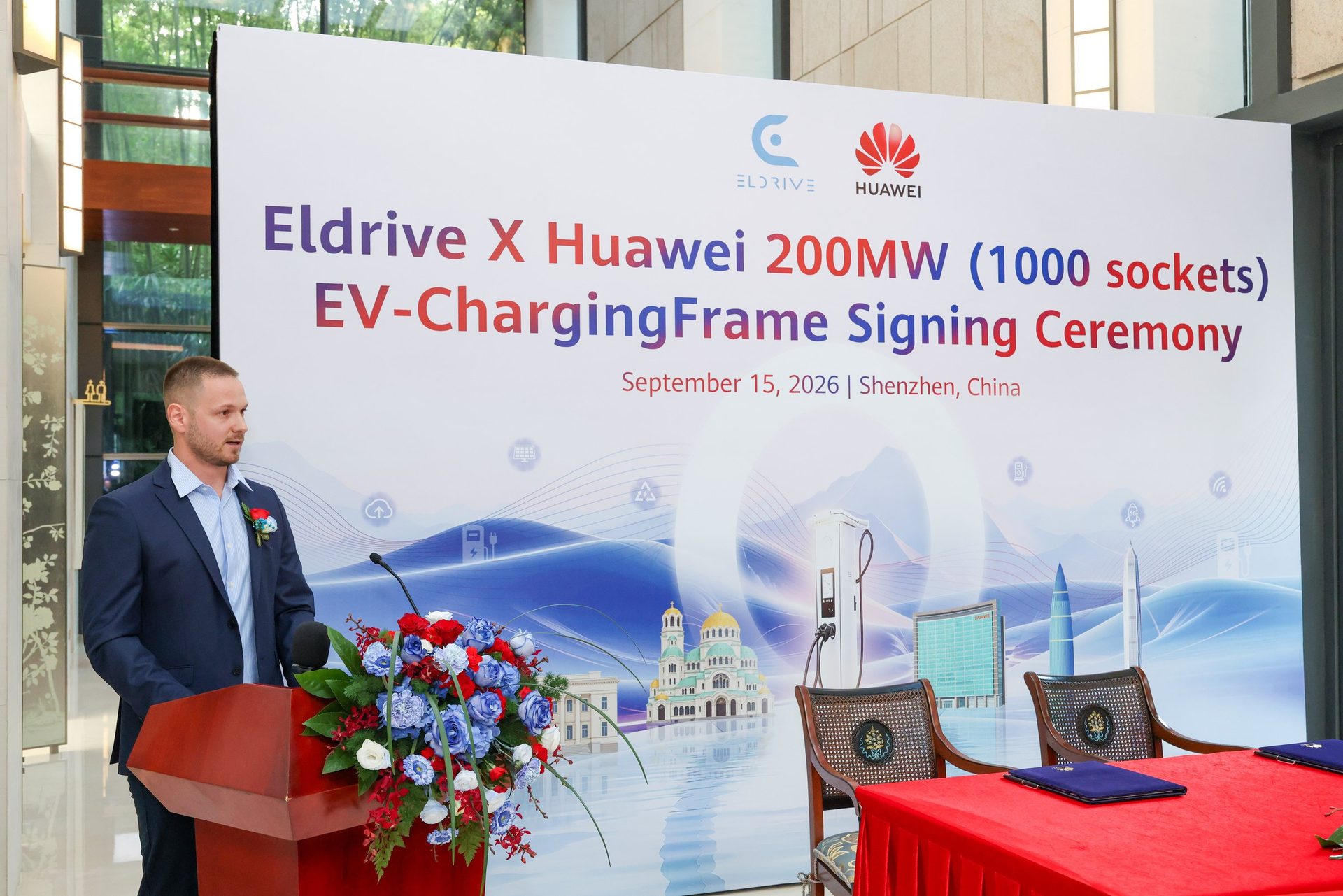
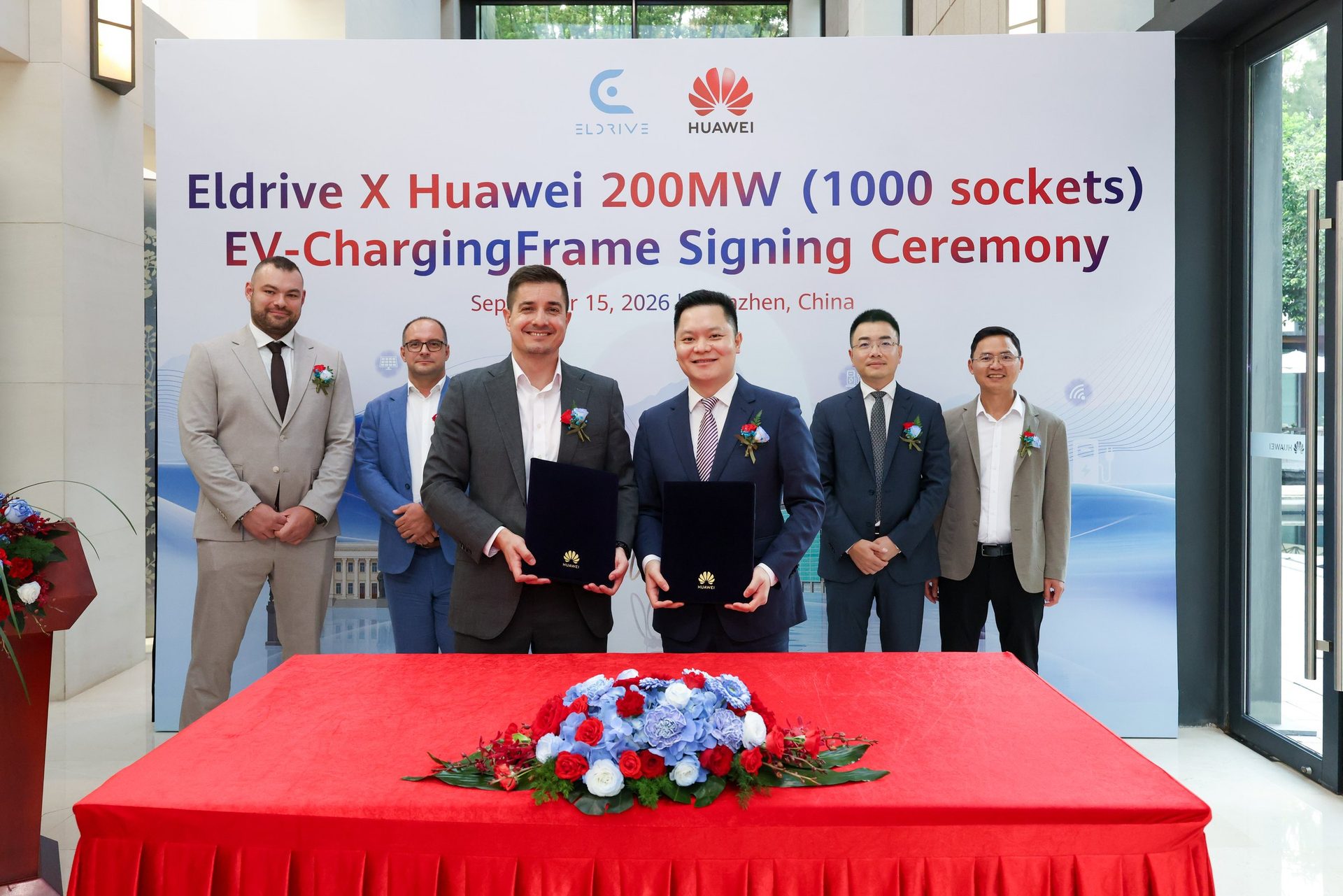
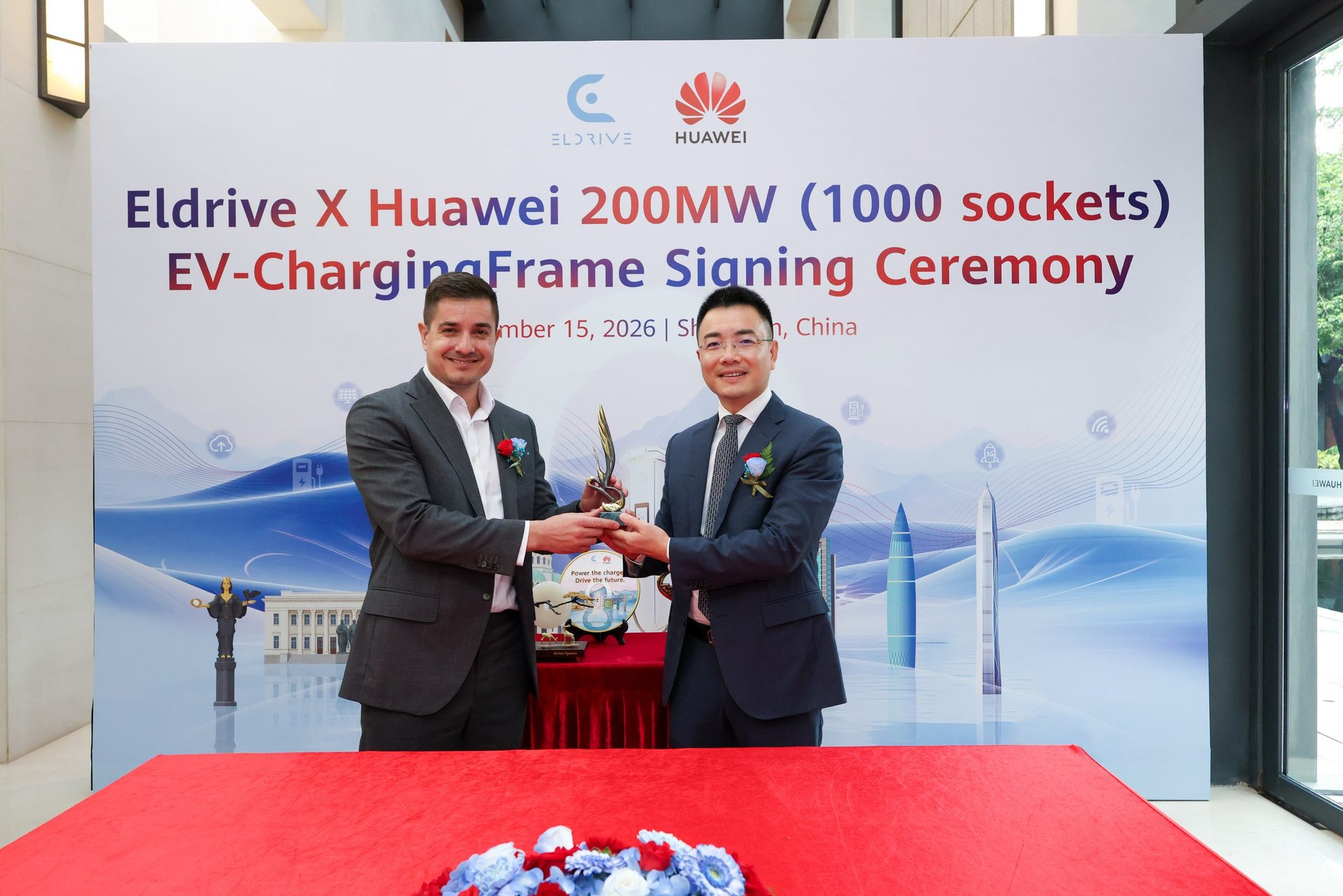
Eldrive and Huawei Digital Power have signed a framework agreement covering 200 MW of EV charging capacity and over 1,000 charging sockets. Stefan Spassov, CEO of Eldrive, signed it at Huawei's headquarters in Shenzhen on 15 September 2026. The agreement moves the Eldrive–Huawei relationship from individual deployments to a much broader framework and will support the deployment of Huawei charging technology across Eldrive's network.
Stefan Spassov on the partnership with Huawei
Recorded at HUAWEI CONNECT 2026 in Florence, a month after the signing in Shenzhen: Eldrive's CEO on the event, the group and the partnership with Huawei.
The agreement in figures
What was signed in Shenzhen, and the network it builds on.
From individual deployments to a much broader framework
Under the agreement, Eldrive plans to deploy Huawei Digital Power solutions as it continues to expand its charging infrastructure. The cooperation builds on technology already operating at Eldrive sites and reflects a broader shift in the EV charging industry: from simply installing more chargers to managing available energy more efficiently across increasingly complex charging locations.
A future CPO will not only operate chargers – it will orchestrate energy flows.
“As charging networks grow, the challenge is not only how many chargers you install, but how intelligently you use the power available at each location. Our experience with Huawei technology has shown us how this can work in real operating conditions, and this agreement allows us to take that experience to a much larger scale,” said Stefan Spassov.
From one charging station to a network across three countries
Eldrive’s journey began in 2016 with a single charging station at The Mall in Sofia. Ten years later, the company operates more than 3,500 charging points across Bulgaria, Romania and Lithuania, with a network ranging from urban charging locations and retail destinations to highway sites and large high-power charging hubs.
Eldrive already operates close to 200 MW of installed charging capacity across its network. The new 200 MW framework agreement with Huawei therefore represents a substantial addition to the scale of infrastructure the company is preparing to deploy.
The cooperation also reflects Eldrive’s approach to growth: technology is first tested in daily operations and then deployed more widely once it has proven that it can meet the demands of different sites and different types of customers.
Huawei technology already in operation
Huawei charging technology is already in use at several Eldrive locations in Bulgaria and Romania.
One of them is The Mall in Sofia, the same location where Eldrive installed its first charger ten years ago. Today, the site represents a very different stage of the company’s development, meeting significantly higher charging demand with modern high-power infrastructure.
Huawei technology also operates at XO Park, on the Hemus highway at the eastern edge of Sofia, where the site serves both local customers and drivers travelling in and out of the city, and at Daniger in Bozhurishte, on the A6 motorway west of Sofia, where charging demand is more closely linked to long-distance travel.
These sites have given Eldrive an opportunity to evaluate the technology under different operating conditions: city traffic, retail charging, highway travel, changing peak periods and different vehicle charging profiles.
That operational experience became the basis for expanding the cooperation. The rollout is already well under way in Romania, where Eldrive deployed 10 Huawei power units in September 2026 alone.
Why the power behind the chargers matters
One of the main challenges in building high-power charging infrastructure is not simply the charger itself but the power available behind it.
Grid connections can be expensive, upgrades can take time, and charging demand is rarely evenly distributed. At any given moment, one vehicle may be capable of charging at high power while another requires significantly less. At another point in the day, several vehicles may arrive at the same time.
Huawei’s shared-power technology is designed to address this challenge. A 720 kW power unit can supply several charging dispensers and dynamically distribute available power between connected vehicles according to their actual needs. Instead of reserving a fixed amount of power for each connector, the system continuously reallocates capacity across the site.
For a charging operator, this means using the available grid connection more efficiently while maintaining flexibility as demand changes. For Eldrive, this is increasingly important as charging locations become larger and the network moves towards higher-power infrastructure.
Building on proven experience
The Shenzhen agreement moves the Eldrive–Huawei relationship from individual deployments to a much broader framework, creating the basis for further deployment of Huawei Digital Power technology within Eldrive’s expanding network.
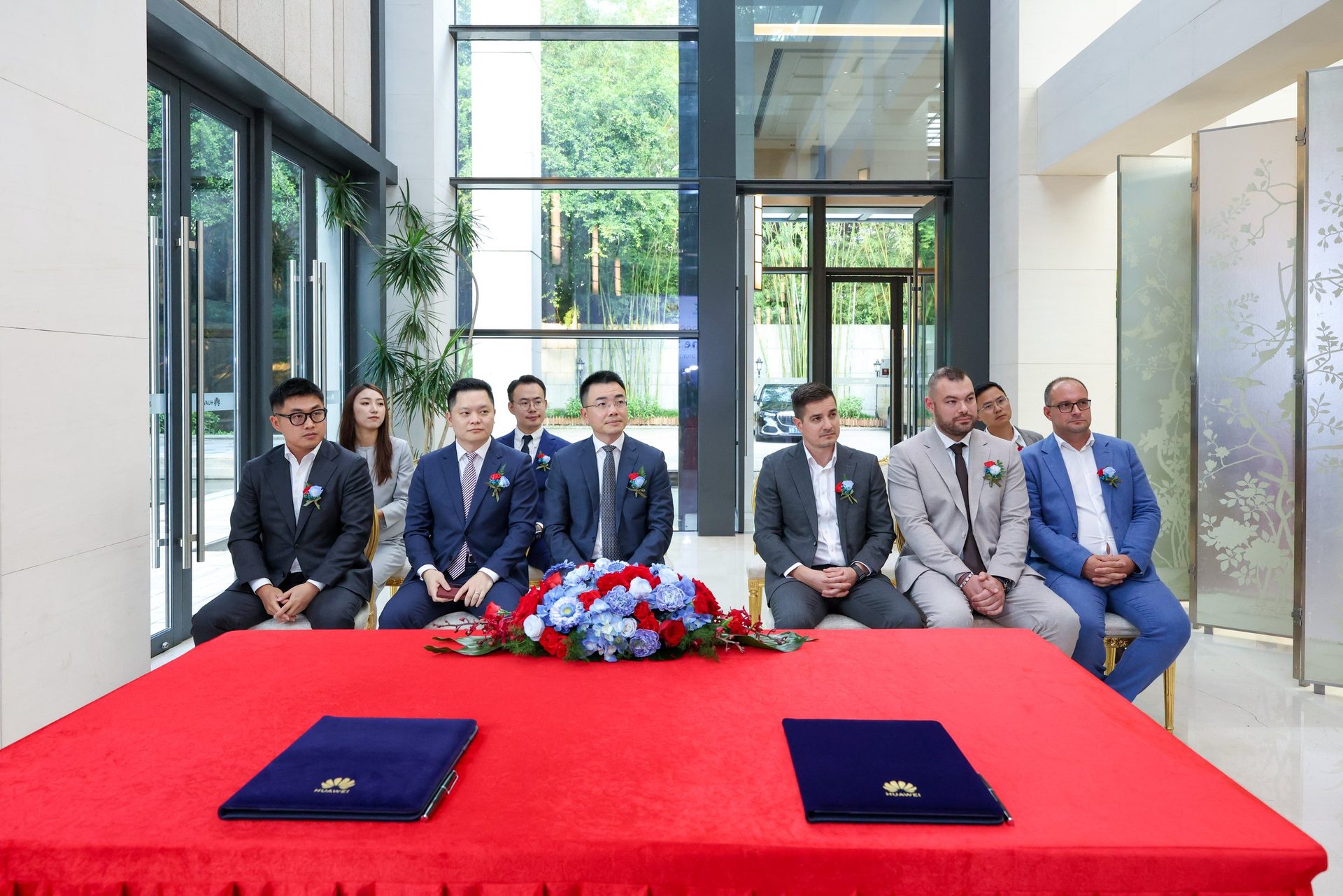
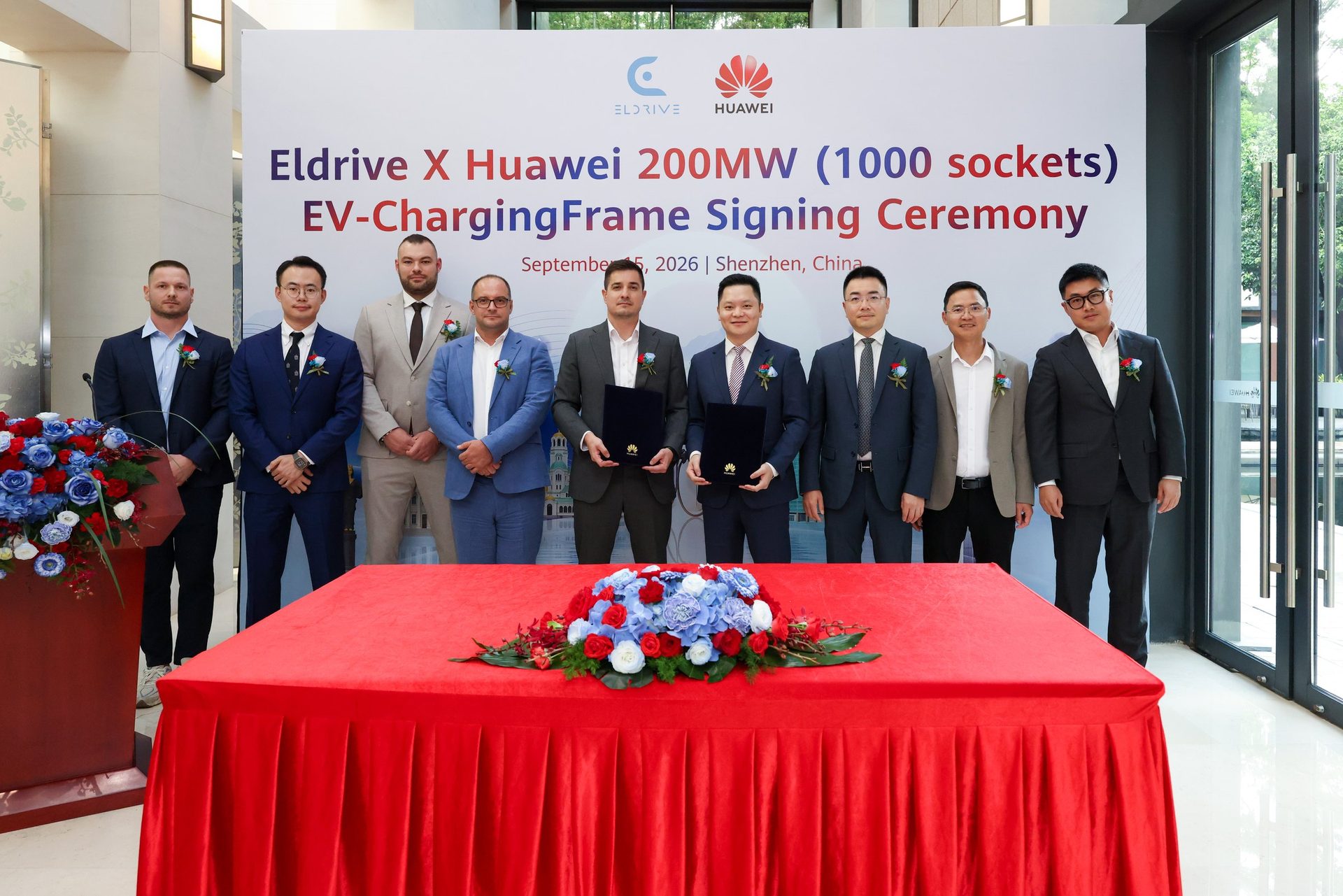
The agreement was signed at Huawei’s headquarters in Shenzhen by Stefan Spassov, CEO of Eldrive. Huawei was represented by Jacky Chen, President of Huawei Digital Power Europe; Feiwei Ye, President of Huawei’s European EV-Charging Business; Li Zemin, CEO of Huawei Bulgaria; Jimmy Zheng, Managing Director of Huawei Digital Power Bulgaria; Eric Yang, Service Director of Huawei Digital Power Bulgaria; and Yordan Krastev, Business Development Manager of Huawei Digital Power Bulgaria.
For Eldrive, which has grown from a single charging station into a regional network spanning three European markets, the next stage is not only about adding more chargers. It is about building larger charging sites, using available energy more intelligently and creating infrastructure that can scale alongside the rapidly growing demand for electric mobility.
On 15 October 2026, Stefan Spassov shared more about Eldrive’s experience at the European EV Charging Network Forum, part of HUAWEI CONNECT 2026 in Florence.
The signing ceremony in Shenzhen
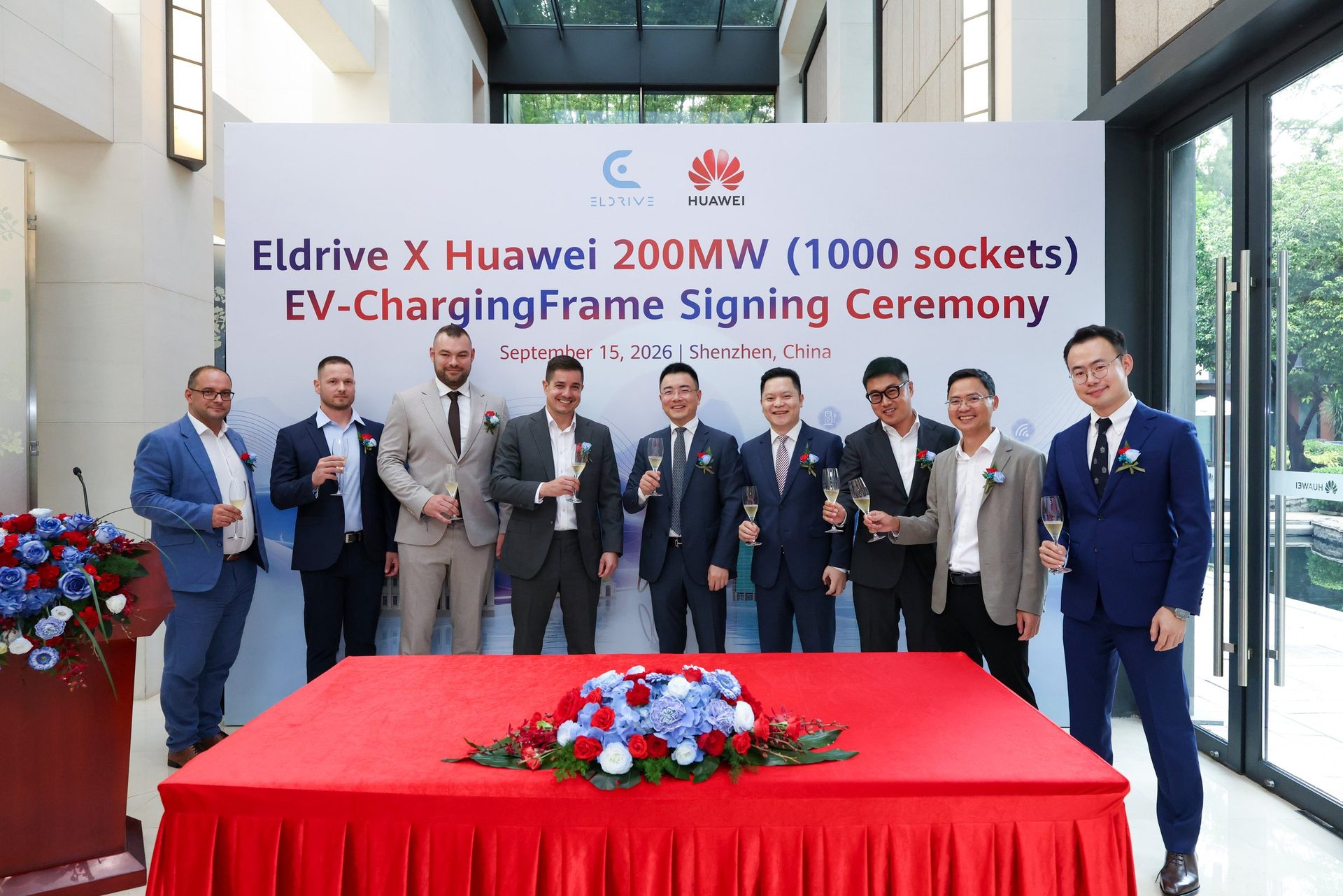
Eldrive and Huawei Digital Power signed the framework agreement at Huawei's headquarters in Shenzhen, China, on 15 September 2026.

From Shenzhen to Florence
A month after the signing, Stefan Spassov presented Eldrive's experience at the European EV Charging Network Forum, part of HUAWEI CONNECT 2026 in Florence: ten years of building charging networks and why that experience led to the partnership with Huawei.
Stefan Spassov at HUAWEI CONNECT 2026 in Florence
About Eldrive
Eldrive builds and operates public EV charging networks in Romania, Bulgaria and Lithuania, from city and retail locations to highway sites and high-power charging hubs. Eldrive is part of Renalfa Solarpro Group: Renalfa IPP generates and stores renewable energy, Toki Power trades electricity, Solarpro builds energy infrastructure and Eldrive operates the charging network.
Charge with Eldrive
Eldrive builds and operates public EV charging in Romania, Bulgaria and Lithuania. Talk to our team about charging for your business, or find a charging location near you.


