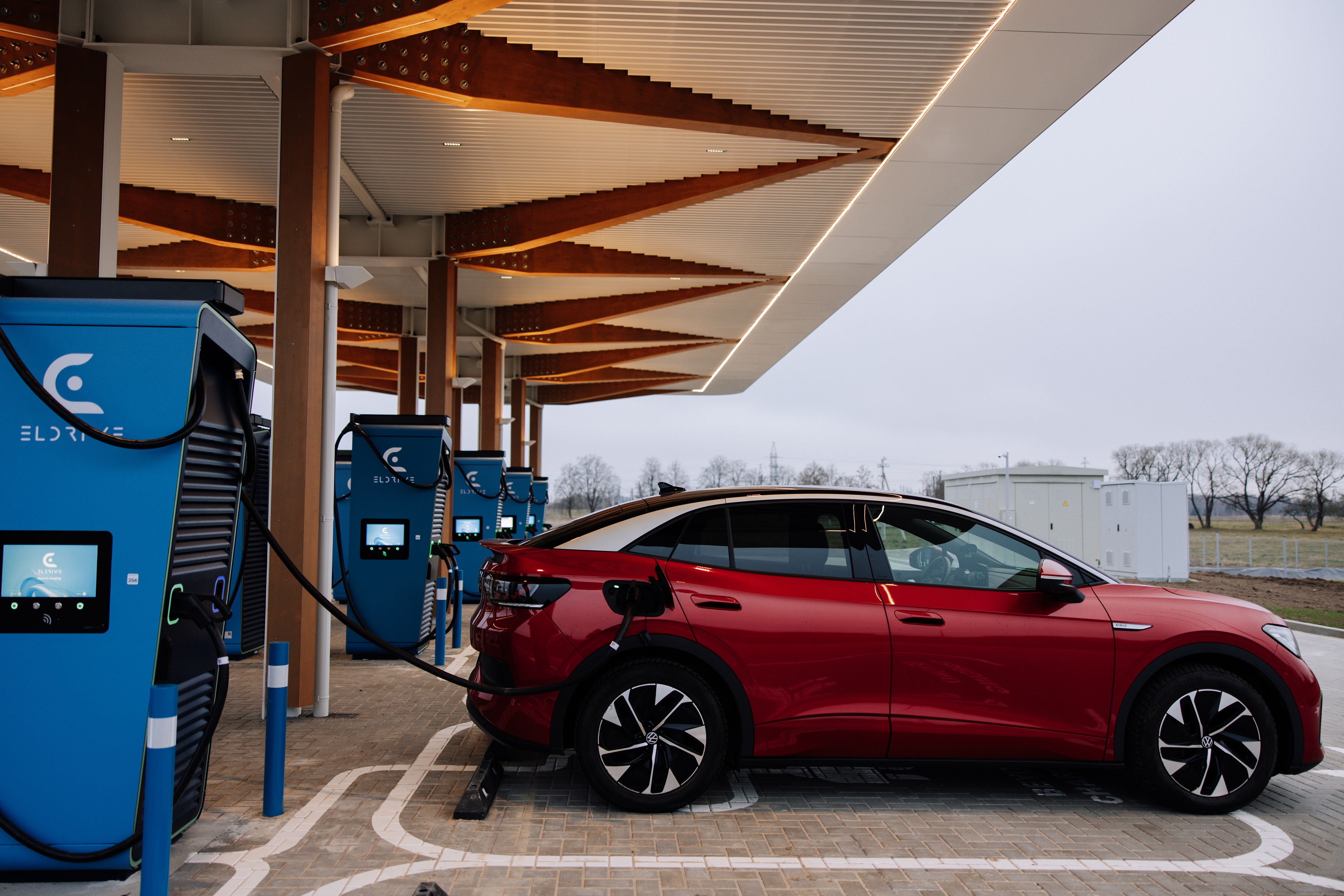
As cold winter days approach, with thermometers dropping to –10 °C at night and hovering around –2 °C during the day, electric vehicle drivers may face not only longer charging times but also a significantly reduced driving range. Most lithium-ion batteries slow down in the cold, so the drop in efficiency can reach 10 to 30 per cent, and in some cases even more. This phenomenon can be seen in models from various manufacturers, including the popular Volkswagen ID.3, ID.4, Tesla, Nissan Leaf and other common electric vehicles.
Although official WLTP data show that, for example, the Volkswagen ID.3 with a 58 kWh battery can travel about 420 kilometres, in winter at –10 °C the real range often falls to 300–350 kilometres. In practice, this means that when travelling your usual route in winter, you need to plan both the route and the charging stops more carefully.
A similar situation can be seen with the ID.4 model, which has a larger battery pack: in summer it can cover about 500 kilometres, but in the cold this figure falls to 380–420 kilometres, especially if the car is used for more than an hour at sub-zero temperatures.
One of the most popular electric vehicle manufacturers, Tesla, is known for its long range, but its models, such as the Model 3 or Model Y, also travel less in winter. For example, the Tesla Model 3, whose nominal WLTP range is about 400–450 kilometres, can in reality cover only 300–350 kilometres in sleety weather. This is due not only to the lower ambient temperature but also to the additional energy needed to heat the cabin and the battery. Some drivers note that if there is no garage or at least a slightly warmer place where the car can be parked overnight, in the mornings the battery cooling-heating system uses even more energy to warm the battery up to its operating temperature.
In winter, not only battery efficiency matters but also driving style. In cold weather, the car's software more often uses regenerative braking when slowing down or driving downhill, but sudden braking and rapid acceleration can increase energy consumption. Therefore, driving at a steady pace can noticeably reduce battery drain and extend the driving range.
For longer winter journeys, it is always worth planning a back-up charging scenario. If in summer you covered certain distances without additional stops, in winter, because the range is 20–30 per cent shorter, you need to find out in advance where along the way you will find fast or at least slow charging stations. When planning trips, pay attention not only to the official charging station markings in your navigation but also check the latest information in the Eldrive app about the newest charging locations.
It is important to understand that all electric vehicles use more energy in winter. This is a natural process that cannot be completely avoided, but it can be managed wisely. The most important things are to charge in good time, plan your route in advance, keep an eye on the weather forecast and use the battery preconditioning and energy-saving functions.
Remember: the lower the air temperature, the more important it is to keep the battery at a higher charge level, so that you do not unexpectedly find yourself in a situation where the range has dropped sharply and there are no free charging stations nearby. All these factors together will help ensure a smooth and safe journey even on the very coldest winter days.


