Easter weekend showed: electric cars in Lithuania have become a fully fledged travel vehicle
Over this year's Easter long weekend, electric vehicle charging activity in Lithuania increased by 28%, according to data from the Eldrive charging network. The highest traffic was recorded on Saturday and Monday, confirming that more and more residents choose electric cars not only for everyday needs but also for longer journeys.
“Long weekends are becoming a kind of infrastructure test. We see that electric cars are increasingly used for trips around Lithuania, and drivers plan charging as a natural part of the journey that fits in with other stops along the way,” says Tomas Tamašauskas, Head of Eldrive Lithuania.
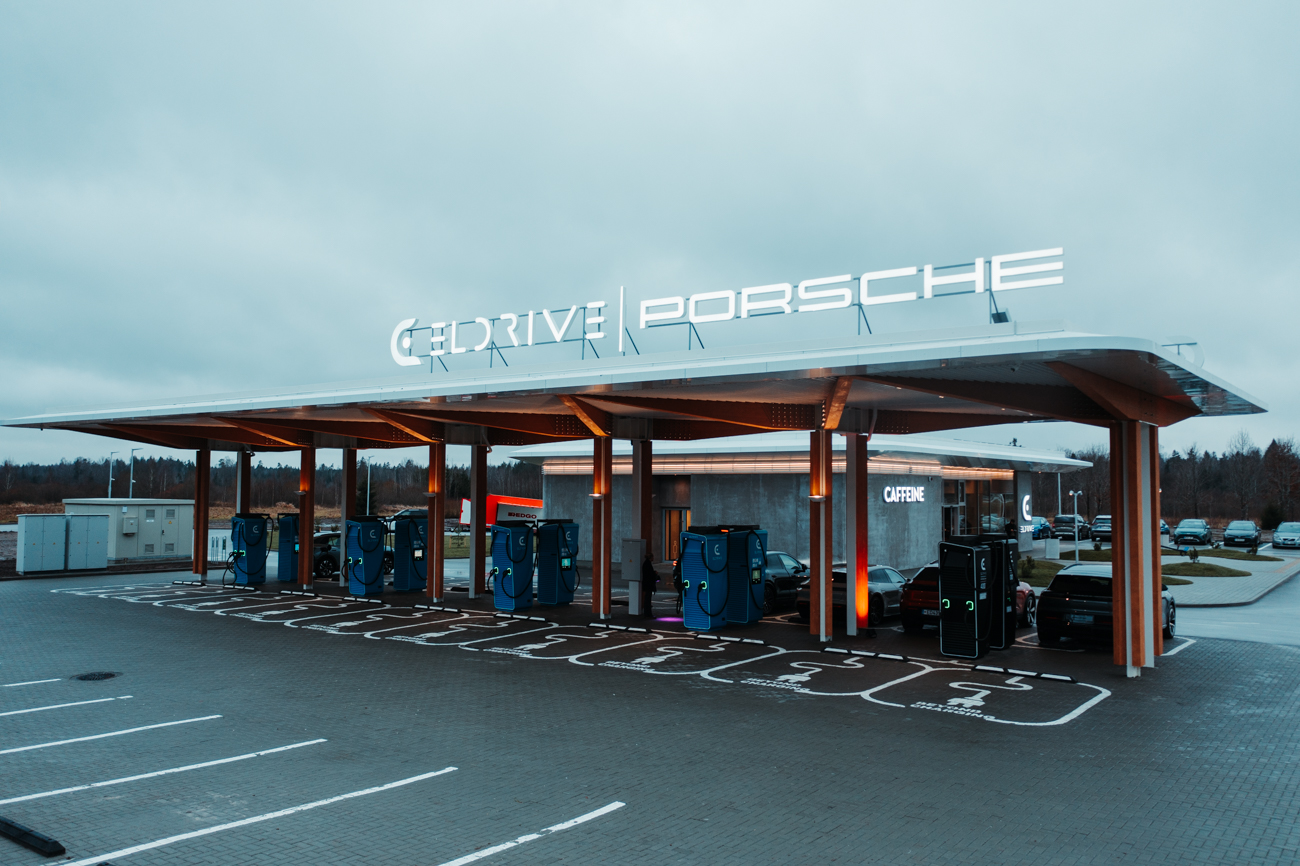
The biggest growth was recorded at fast-charging hubs along the country's main arteries. The Eldrive Porsche Charging Hub sites near Raseiniai and Rietavas (A1 highway) stood out in particular, as did the Panevėžys bypass, where the number of charging sessions almost doubled. The Eldrive charging hub in Senoji Varėna grew by around 40%.
Charging is becoming part of everyday behaviour
A marked change is also visible in cities. Over the holiday period, the number of charging sessions at shopping centres increased by around 25%, and the amount of energy charged by as much as 41%.
“The data show that the role of charging itself is changing – it is no longer a separate stop, but a natural part of the journey, integrated into drivers' other habits,” says T. Tamašauskas.
Resorts among the most popular destinations
High activity was also recorded in Lithuania's resorts. In Palanga, the number of charging sessions doubled over the week, in Druskininkai it grew by around 23%, and in Klaipėda by around 15%.
According to Eldrive representatives, this confirms that electric cars are increasingly used not only in cities but also for trips to holiday destinations.
“The increased activity on the coast and in the resorts is a clear signal to us that the electric car has long ceased to be just urban transport,” says T. Tamašauskas.
The growing number of electric cars strengthens the trend
According to data from the Ministry of Transport and Communications, at the beginning of April 2026 more than 49,000 electric vehicles (M1 and N1 categories) were registered in Lithuania, more than half of which were battery electric vehicles.
“The number of electric cars in Lithuania is growing steadily, so it is natural that the need for infrastructure is also increasing. Weekends like this allow us to assess how the network copes with growing traffic and where further expansion is needed,” says T. Tamašauskas.


